
This years UK Men’s Sheds Association (UKMSA) ShedFest event was held at Worcester University Area on Thursday 14th August. Oliver Buchan and Marco Smith went along to meet some of the shedders in the exhibition hall and attend some of the presentations in the conference room.
(more…)News Category: Visits
Trips by Shedders to other sheds or locations of interest
-

04 July 2026 – Dalmann Visit
Saturday 4th July 2026, Shedders Marco Smith and Tony Biggs visited Dalmann Exotic Woods in Lambourn to see a woodturning demonstration by Frans Brown.
(more…) -
28 Apr 2026 – Cricket Bat Maker
From tree to pitch
On 28 April 2026, six Shedders visited the Cricket Bat Maker’s workshop in Aldermaston.
Owned by Surridge Willow — setup by a member of the famous Surridge cricketing family — the workshop sits secluded off a private road in Aldermaston. Felled willow trees are fully prepared at the workshop before being shipped to India and Pakistan for final treatment.
Our host showed us the entire process: splitting the trees, rough shape cutting, grading, and finally drying.
The Arrival
Because most Shedders live in the Tadley area, we arranged car sharing to get to Aldermaston. We had permission to park in the large carpark of the nearby Hind’s Head Pub. Of course we had to return the favour by having a pint before returning home.
Once we all arrived, we walked to the workshop to watch every stage of the cricket bat making process.
Straight away we could see some felled willow trees in the yard ready for processing.
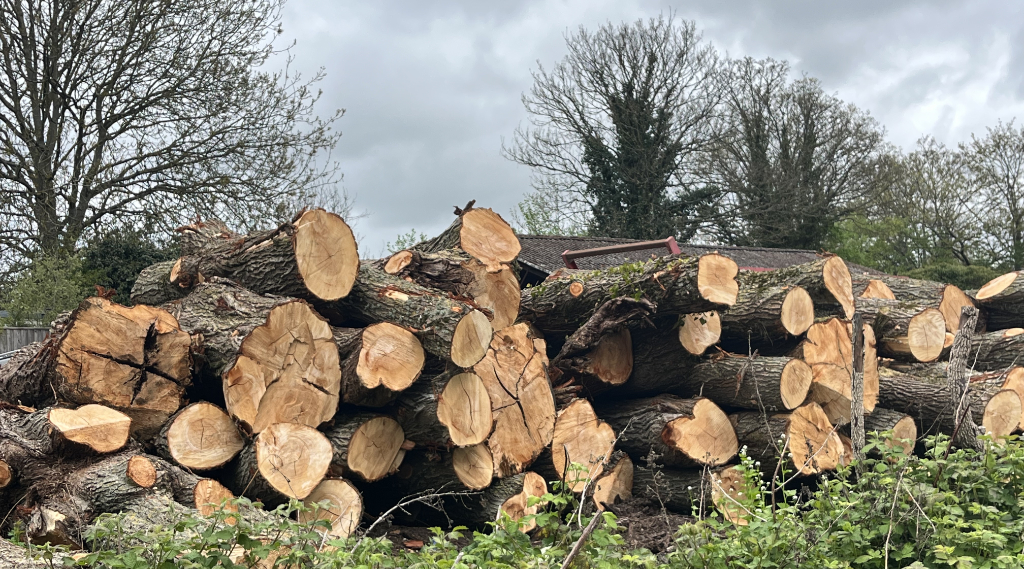
Felled willow trees waiting to be cut into rounds We then saw how felled trees become finished cricket bat clefts:-
1 Rounds
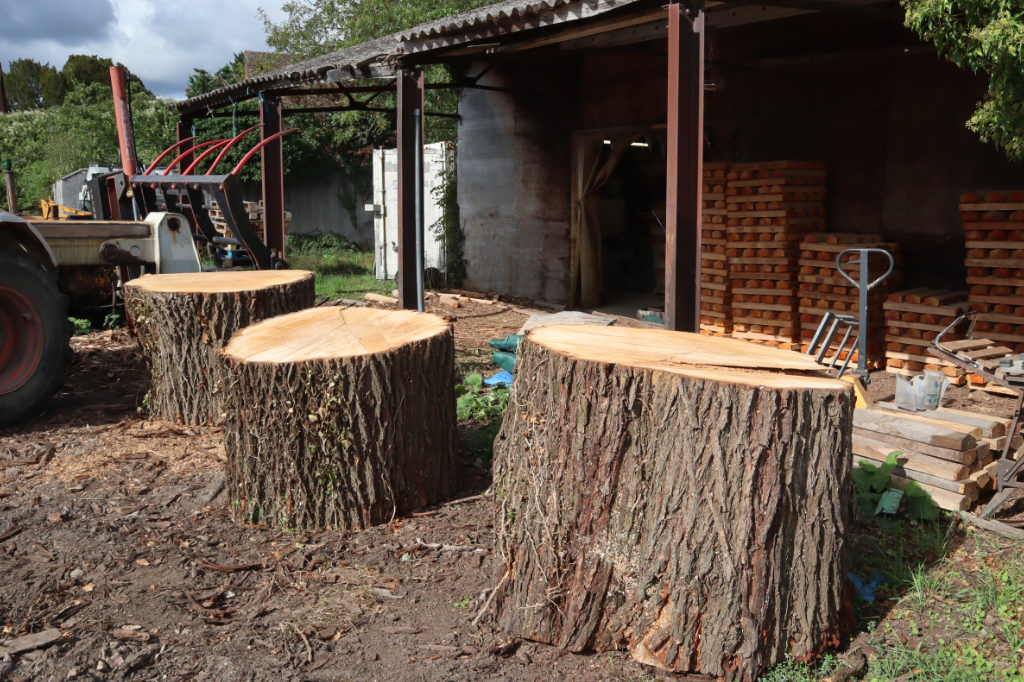
Only the big ones make it
Trees must have a minimum circumference of 60 inches at shoulder height to be suitable for conversion into rounds using a chainsaw.
2 Segments
Splitting rounds into segments
Our guide showed us how he marks each round into segments before splitting by hand if the round is very large, or by using a hydraulic splitter if it is is more manageable.
Marking the segments so as to avoid natural splits and knots ensures the best quality end product.
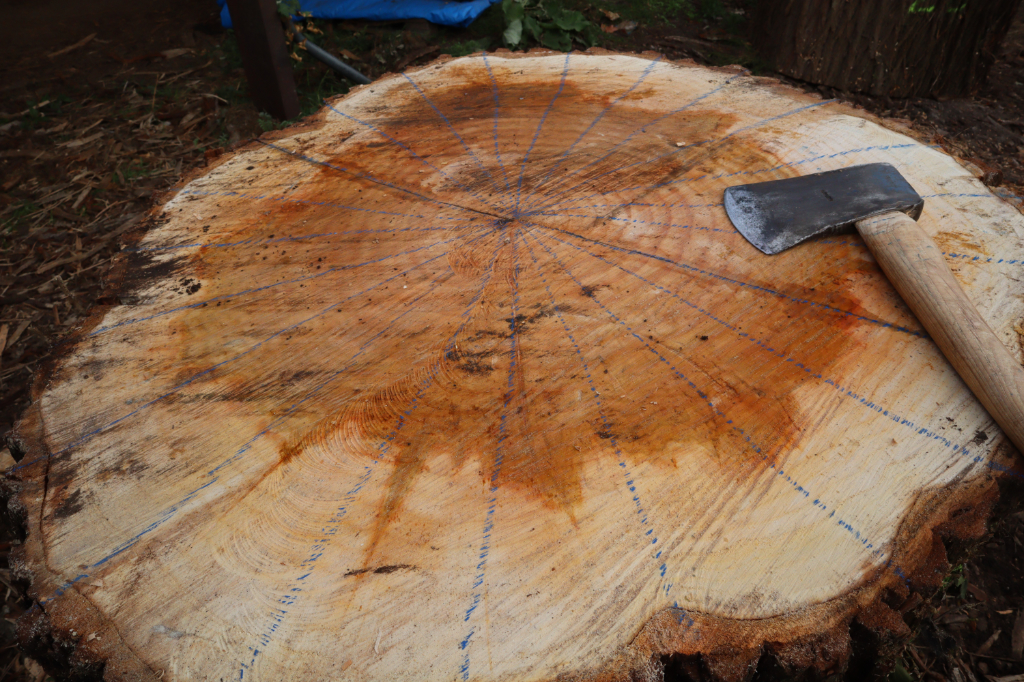
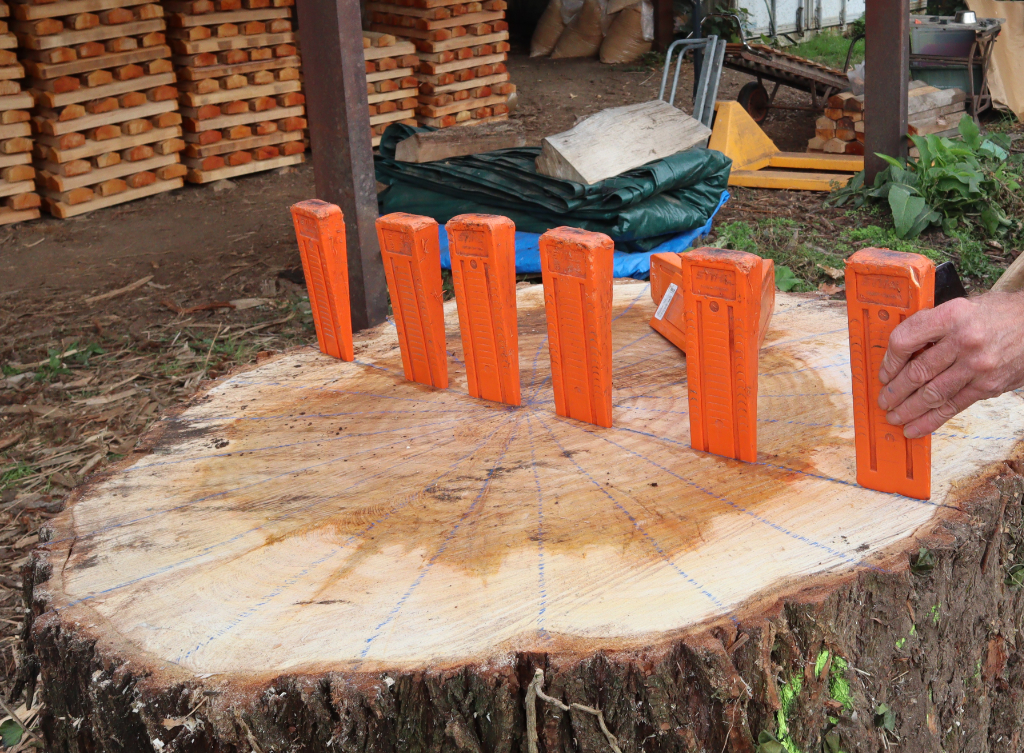
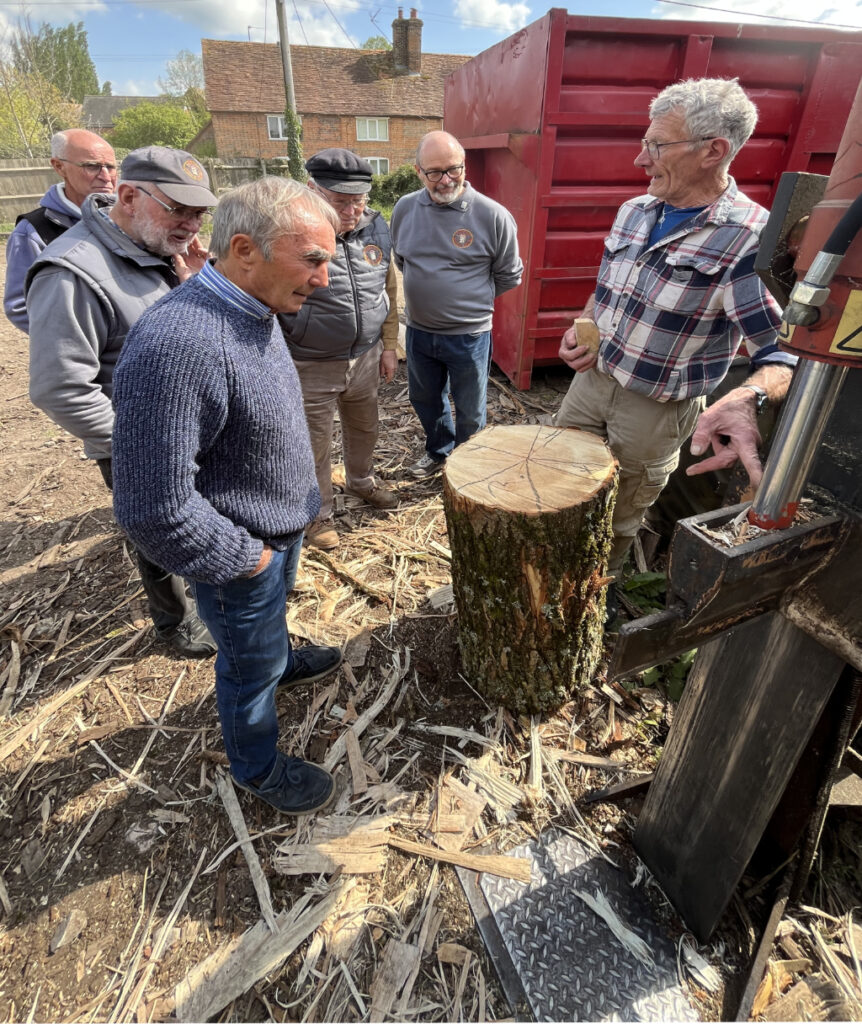
Each split segments is then stacked ready for the next stage until all the rounds are split.
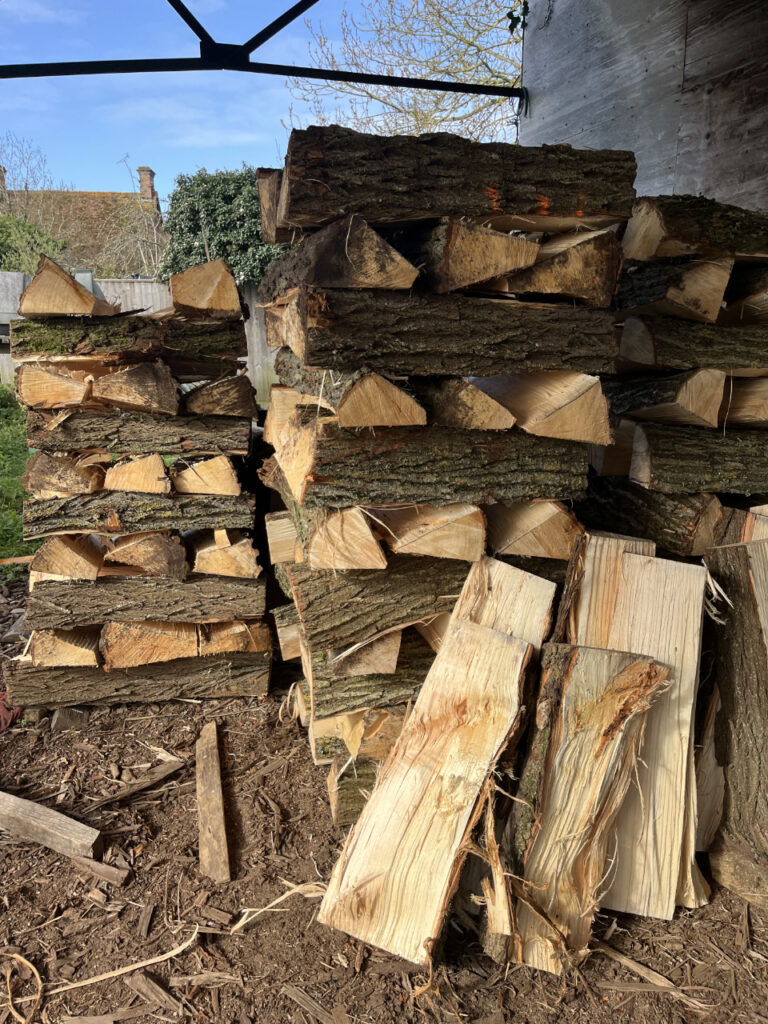
3 Clefts
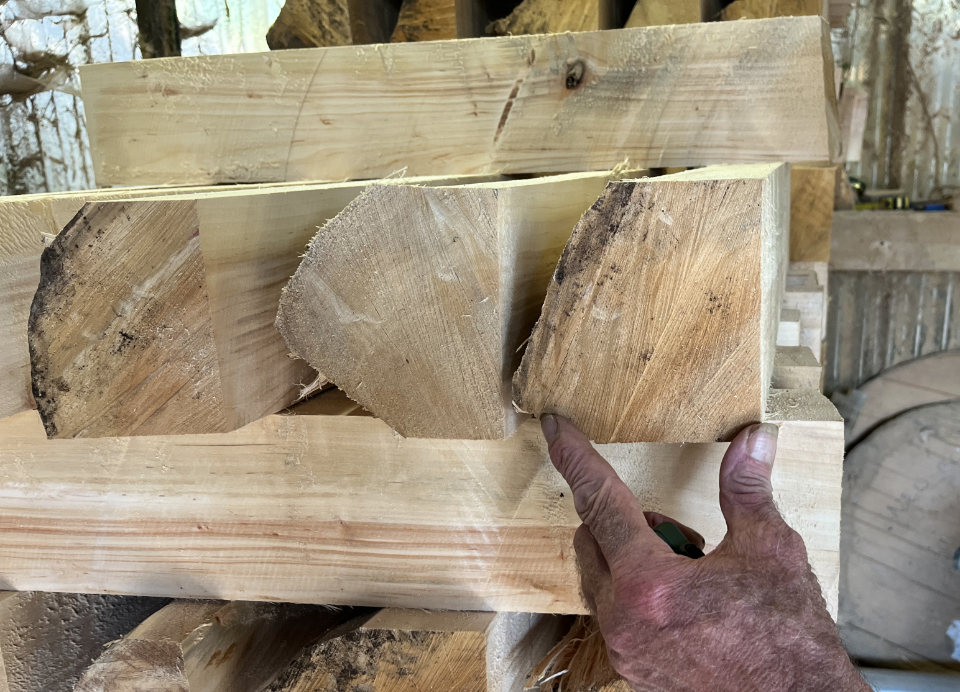
The bat shape starts to show
We watched as the our guide cut the segments on a circular saw into rough cleft shapes, aligning the best surface along the long edge for the bat face.
Cleft sizing
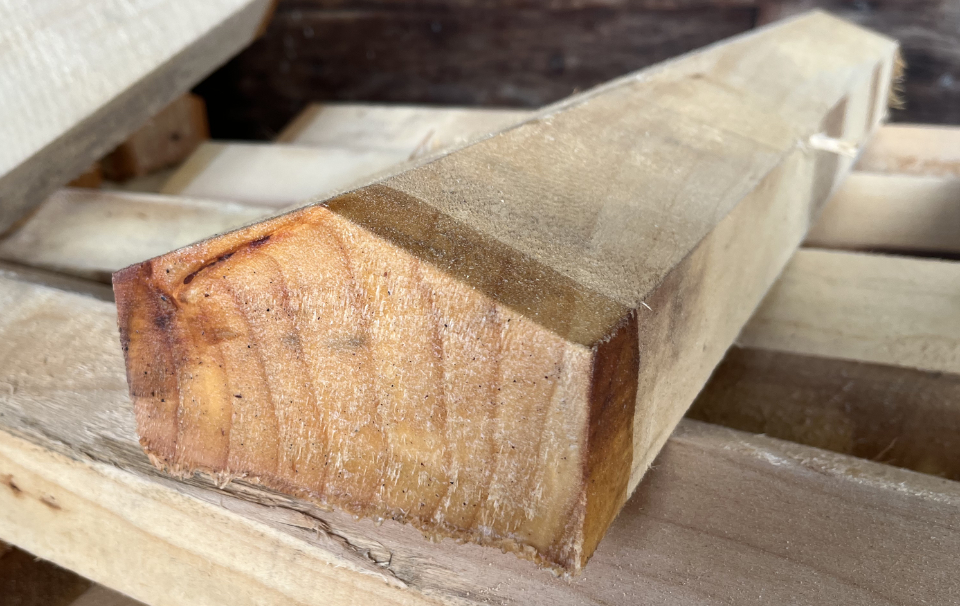
The clefts then have their shapes and sizes refined.
The width needs to be no small than 5″, the sides 2″ and the centre peaks at 3″.
The cleft length are 23″-25″ for adult bats and 23″ for youths.
4 Grading and drying
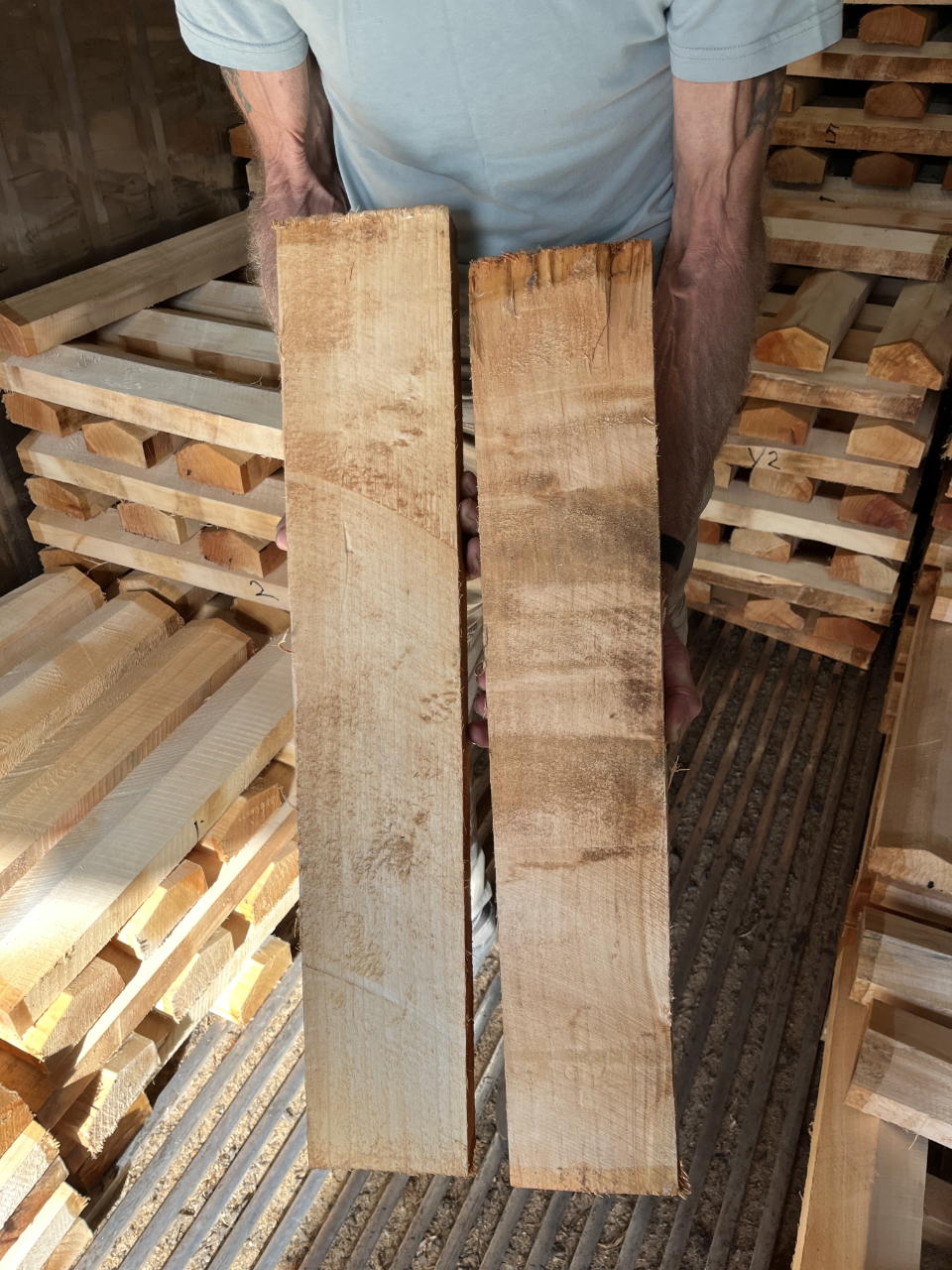
Grain and colour affects the grade
The team then carefully inspects and grades each cleft based on its quality. Factors affecting the grade depends upon how straight the grain is, how many growth rings there are (ideally between 7 and 9), colour (determining heart wood).
The team then allocates a grade number depending on its quality: numbered 1 for a perfect cleft going to 6 (velum) the least best.
This photo shows two clefts, the one on the left is hight quality; the growth lines are straight and parallel, the colour is consistent, whereas the one on the right has wavy growth lines.
Sealing
Dipping the cleft ends in hot wax seals the end grain, slowing down the drying process where moisture escapes fastest.
Fast drying out causes cracking.
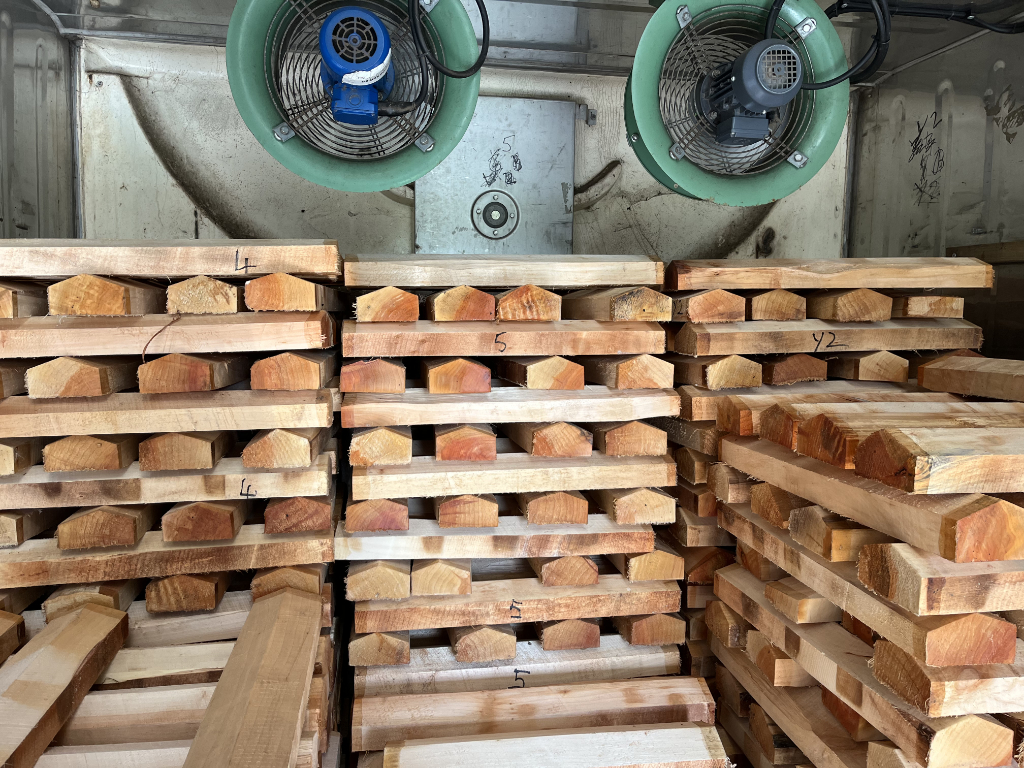
Slowly does it
The cleft are then stacked in the drying room according to their grades.
A dehumidifier constantly circulates air through the drying room, maintaining a steady temperature of 20–30°C.
The drying process takes between 3 and 4 months.
The finishing process
Once the drying process is complete the clefts are shipped to various manufactures who complete the bat assembly and finishing process; these are usually specialist factories in India and Pakistan.
The bats are sold through many outlets, mainly depending upon their grade; top grade bats can retail for £500+, bats graded at level 4 or 5 could sell for £100-£200. The lower graded bats would retail through budget stores on retail parks.
End event drinks
We enjoyed a very interesting tour of the Bat Making workshop after which we retired back to the Hind’s Head to wind down with a pint.
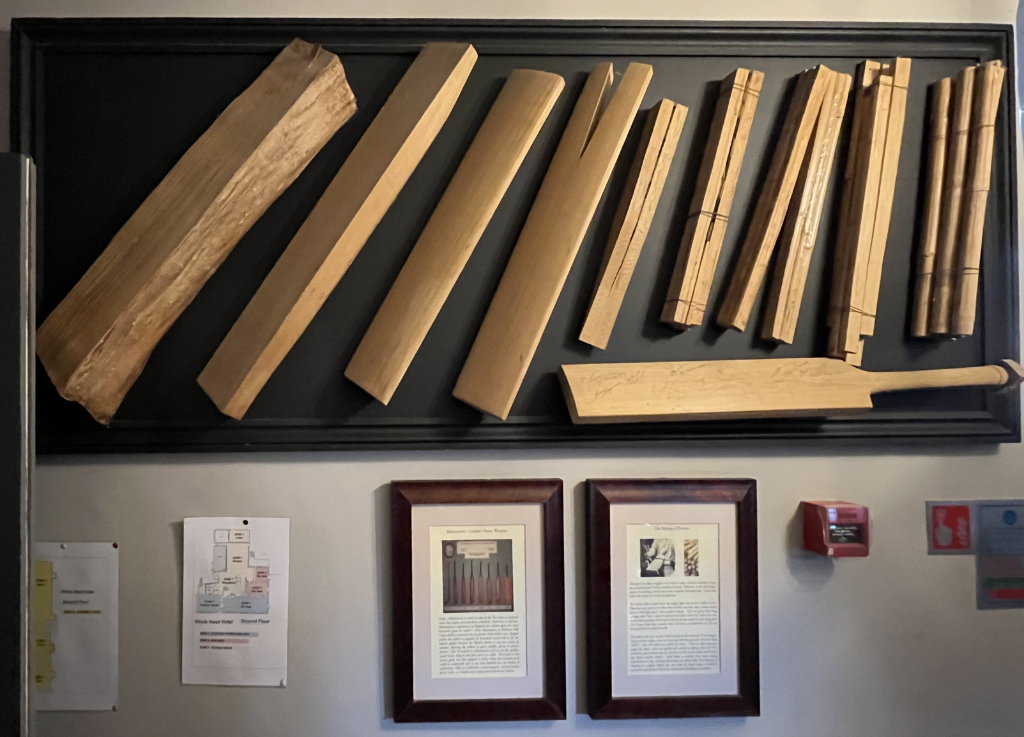
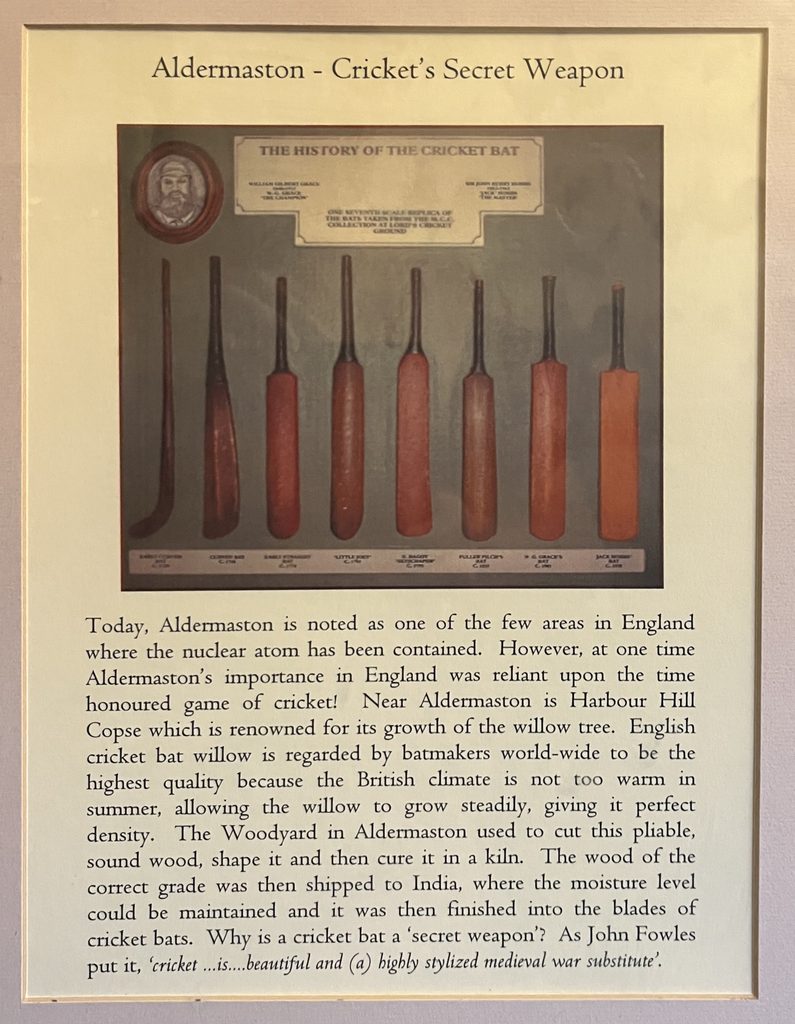
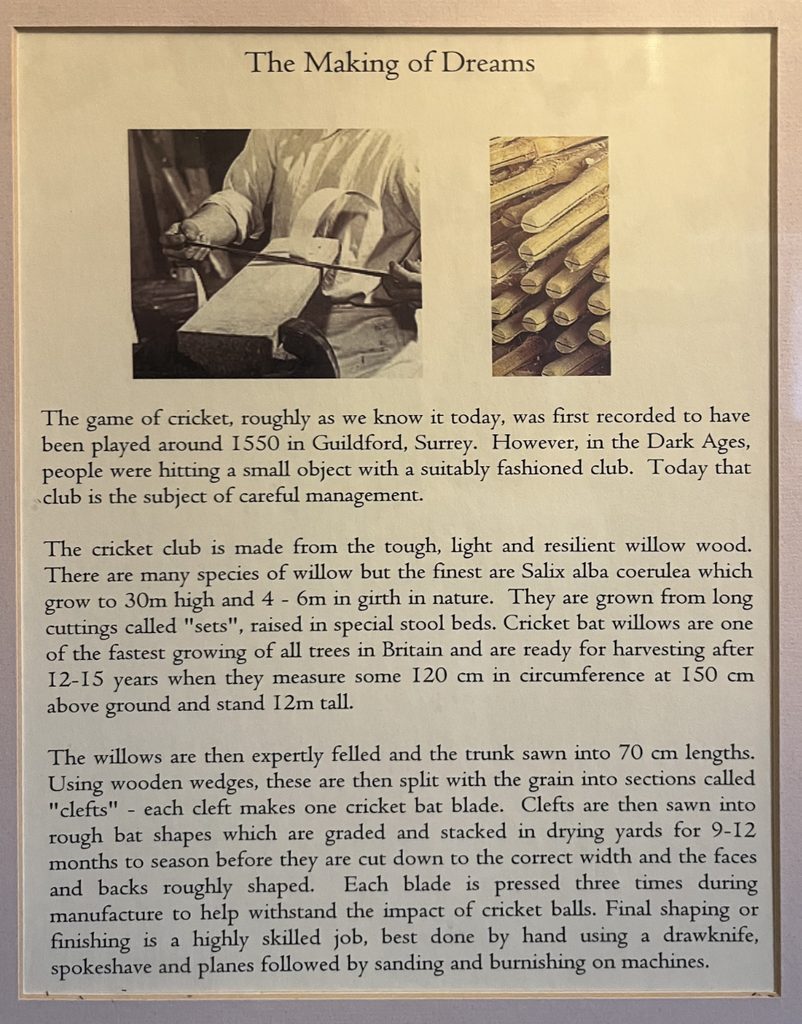
If you are ever in there, in the corridor near the front door there is a display of the cricket bat making process along with some information posters.
Interested in Shed events?
Want to see what we’re all about, or join us at a future Shed event? We’d love to meet you! Visit our About Us page to learn more, or head straight to Join Us to fill out a Membership Request form.